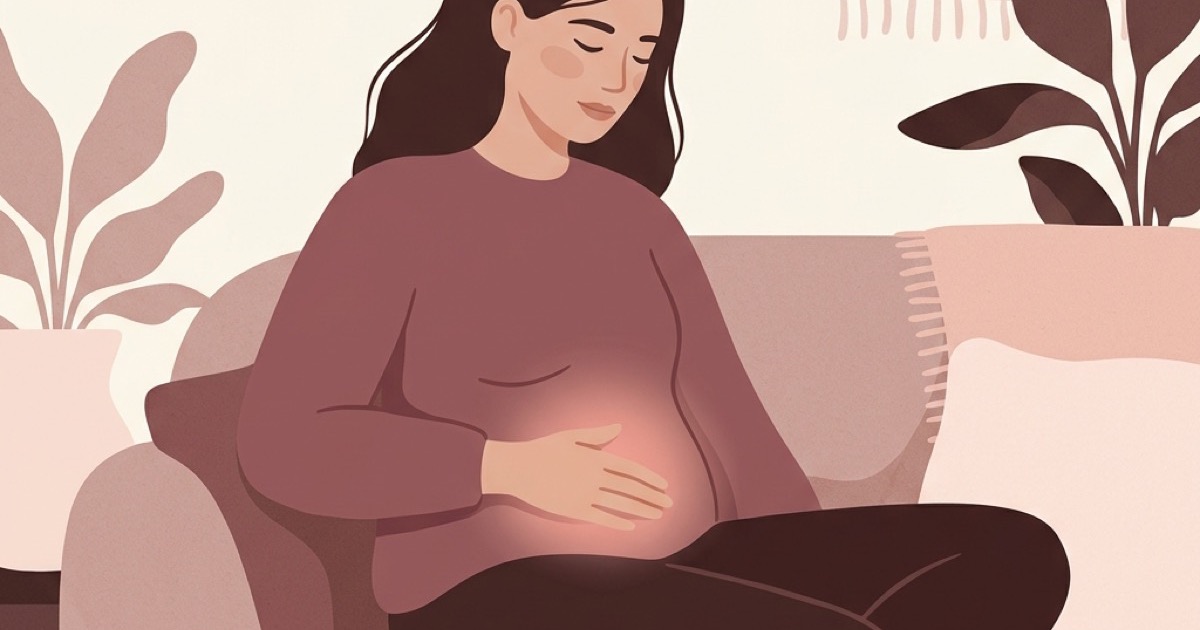
Describing endometriosis pain to someone who hasn’t experienced it is genuinely difficult. It is not the dull ache of ordinary period cramps. It is not predictable in the way that many conditions are. And it presents so differently between people — even between people with the same stage of disease — that a single description rarely captures what it actually feels like.
Endometriosis pain most commonly presents as a deep, stabbing, or burning pelvic sensation that worsens with menstruation — but it can also manifest as a constant heavy aching pressure, sharp radiating pain down the thighs and rectum, pain during or after sex, and pain on defecation. There is no single universal description because disease location, nerve involvement, and central sensitisation all shape how endo pain is experienced.
Key Takeaways
- Endometriosis pain is characterised by its depth (felt internally rather than at the surface), its cyclical intensification around menstruation, and its variability in character — from stabbing and burning to deep aching pressure
- Pain does not correlate reliably with disease stage: some people with Stage IV endometriosis have mild pain; others with Stage I are severely disabled
- The involvement of specific organs determines specific pain types: bowel endo causes rectal and defecation pain; bladder endo causes urinary symptoms; deep infiltrating endo of the uterosacral ligaments causes severe dyspareunia
- Central sensitisation — where the nervous system becomes amplified after prolonged pain exposure — is common and explains why endo pain can persist even after lesions are treated
- The pain-anxiety cycle (pain raises anxiety, anxiety lowers pain threshold) is clinically documented and adds psychological complexity to the physical symptom
The Core Pain: What Most People Describe First
The most consistent description of endometriosis pain across patient accounts and clinical literature is deep pelvic pain — a sensation located centrally in the pelvis and lower abdomen that feels internal rather than surface-level. This depth is one of the features that distinguishes endo pain from muscle cramps or skin pain: it is not something that responds to pressing on the abdomen, because the source is below the peritoneal surface.
Within that broad description, the character varies considerably:
Stabbing or sharp pain is common during menstruation and can be sudden enough to be disabling. Many people describe being unable to walk during the worst minutes of a flare because the pain is arresting.
Burning pain is often associated with nerve involvement — when endometriotic lesions press on or infiltrate the nerves of the pelvic floor, sacral plexus, or uterosacral ligaments. This burning quality is frequently described as radiating — moving down the inner thigh, buttocks, or into the rectum.
Heavy aching pressure — sometimes described as feeling like a bowling ball in the pelvis, or as though organs are being pulled downward — is characteristic of deep infiltrating endometriosis (DIE) and is distinct from acute stabbing pain. It is often present as a background sensation for days before menstruation begins.
Cramping that resembles severe period cramps but doesn’t respond to typical over-the-counter pain relief is often one of the first recognisable symptoms. The difference from ordinary dysmenorrhoea is degree: endo-related cramping frequently requires prescription-strength analgesia or lying down, and does not resolve within a few hours.
How Disease Location Shapes Pain Character
Different lesion locations produce recognisably different pain patterns. Understanding this helps both in self-advocacy and in explaining symptoms to a clinician.
Peritoneal Lesions
Superficial peritoneal endometriosis — lesions on the lining of the pelvic cavity — often produces the classic cyclical cramping pain. It may also produce pain during ovulation (mittelschmerz that is more severe than usual), as the hormonal environment around ovulation triggers prostaglandin release from lesion tissue.
Uterosacral Ligament Involvement
The uterosacral ligaments connect the back of the uterus to the sacrum. When endometriosis infiltrates these ligaments — as it commonly does in deep infiltrating endo — the result is severe dyspareunia: deep, aching pain during penetrative sexual intercourse that can persist for hours afterward. This pain is often described as a “hitting” sensation at the back of the vagina and into the pelvis. It is one of the most disabling symptoms of endo and one of the most underreported, because patients are often reluctant to describe it unless directly asked.
Bowel Endometriosis
Lesions on or near the rectosigmoid colon produce a distinctive pain pattern: dyschezia, or pain during or after defecation, which intensifies during menstruation. People describe this as a tearing or cramping pain deep in the rectum, sometimes severe enough to cause fear of having bowel movements during their period. Bloating, constipation, and diarrhoea are also common during flares (see our guide to endometriosis vs IBS for more on distinguishing the two conditions).
Bladder Endometriosis
Bladder involvement causes a pelvic pressure and urgency that is cyclically worse around menstruation. Some people describe pain on urination (dysuria) or a feeling of incomplete bladder emptying. This is frequently misdiagnosed as recurrent UTIs — see our article on endometriosis bladder symptoms.
Ovarian Endometriomas
Endometriomas — ovarian cysts filled with old blood — may be relatively asymptomatic until they become large or rupture. When they cause pain, it is often a dull, persistent ache on one or both sides of the lower abdomen, with acute episodes if the cyst bleeds into itself.
The Non-Cyclical Component: Chronic Pelvic Pain
One of the most important distinctions for understanding endo pain is between cyclical pain (pain that tracks menstruation) and chronic pelvic pain that persists throughout the month.
Mild endometriosis often produces mainly cyclical pain — pain that is much worse during the week of menstruation and manageable the rest of the month. But in moderate to severe disease, particularly with deep infiltrating lesions or significant adhesions, many people experience a chronic low-grade pelvic ache that never fully resolves. The menstrual phase intensifies this baseline, but there is no pain-free week.
This chronic component is in part explained by central sensitisation — a neurobiological process in which the central nervous system becomes persistently amplified after prolonged pain signalling. Once central sensitisation develops, the pain response is no longer just about the lesions: the nervous system has learned to amplify pain signals even when the triggering stimulus is mild. This is why some people continue to experience significant pain after surgery that successfully removed all visible lesions — the nervous system has been rewired by years of pain, and recovery requires more than tissue removal. Pain physiology education and multidisciplinary approaches (including pelvic floor physiotherapy and CBT for chronic pain) address this component of endo pain.
What Makes the Pain Worse
Sexual intercourse (particularly deep penetration) and orgasm — which causes uterine contractions — commonly worsen endo pain. Many people report that pain is worst in the first few days after a period and peaks with the next menstruation.
Bowel movements during the period are frequently described as the worst pain of the cycle for those with bowel involvement.
Ovulation — approximately mid-cycle — causes a secondary pain peak for many. This reflects prostaglandin release from lesion tissue in response to the ovulatory hormone surge.
Stress and sleep deprivation worsen pain through the anxiety-pain cycle and by reducing the body’s pain threshold. This is not psychological — it is neurobiological, and it is documented in the chronic pain literature.
Why the Pain is Frequently Dismissed
One of the most clinically important features of endometriosis pain is how often it is dismissed as exaggerated period pain. This happens because:
- Pain does not correlate with visible disease extent — a person with Stage I endo may be more severely affected than someone with Stage IV, which undermines the idea that “real” disease produces “real” pain
- Pain is self-reported and cannot be measured externally
- There is a longstanding pattern in medicine of under-rating women’s pain, particularly gynaecological pain
“Studies consistently show that people with endometriosis wait an average of 7–10 years for diagnosis, in significant part because their pain is normalised or dismissed as typical dysmenorrhoea. The pain is not normal — it is a symptom of a progressive disease.”
If your pain significantly affects your ability to function — to attend school or work, to maintain relationships, to exercise or sleep — it is not normal period pain. It warrants investigation. See our guide to how to get an endometriosis diagnosis for what to ask for and how to build your case.
Tracking Pain for Clinical Usefulness
Pain that is difficult to describe verbally becomes much more legible when it is documented systematically. Daily logging of pain severity (on a 0–10 scale), pain character and location, and the cycle phase at which it occurs transforms a subjective experience into clinical data.
Over two or three cycles, a log of this kind reveals patterns — which days are worst, what activities or positions trigger it, whether it is improving or worsening — that are genuinely useful in a clinical appointment. EndoTracking tracks pain by location (using a body diagram), severity, and character alongside cycle phase, generating a visual record that maps exactly what your pain is doing across the month. This kind of structured record is one of the most effective tools for being taken seriously at an appointment. For the exact words and pain scale to use in the room, see how to describe endometriosis pain to your doctor.
EndoTracking is a personal health tracking app and does not provide medical advice. If you are experiencing severe pelvic pain, consult a gynaecologist or endometriosis specialist.