
If you’ve ever looked in the mirror in the morning looking flat, and by the afternoon couldn’t button your jeans — without having eaten anything unusual — you already know what endo belly is. It is one of the most distressing and least medically acknowledged symptoms of endometriosis: an abdominal distension so sudden and severe that it can look like months of pregnancy appearing in hours.
Endo belly is extreme abdominal bloating associated with endometriosis — caused by inflammation, prostaglandin-driven gut motility changes, and bowel involvement — that can appear rapidly and cause significant visible swelling lasting hours to days. It is not regular bloating, and it does not reliably respond to standard bloating remedies.
Key Takeaways
- Endo belly is driven by multiple mechanisms simultaneously: prostaglandins, peritoneal inflammation, gut motility disruption, and in some people, direct bowel endometriosis involvement
- It is cyclically worse — typically peaking in the days before and during menstruation — but can occur at any point in the cycle in people with significant disease
- A low-FODMAP diet reduces symptoms for some people but is not a cure; it addresses fermentable gas triggers rather than the underlying inflammatory cause
- Bowel endometriosis (lesions on the rectosigmoid colon or small bowel) is a specific cause of severe endo belly that requires specialist imaging and surgical assessment
- Symptom tracking can help you remember when bloating occurred alongside cycle dates and other symptoms, but it does not identify a trigger or create clinical evidence for referral
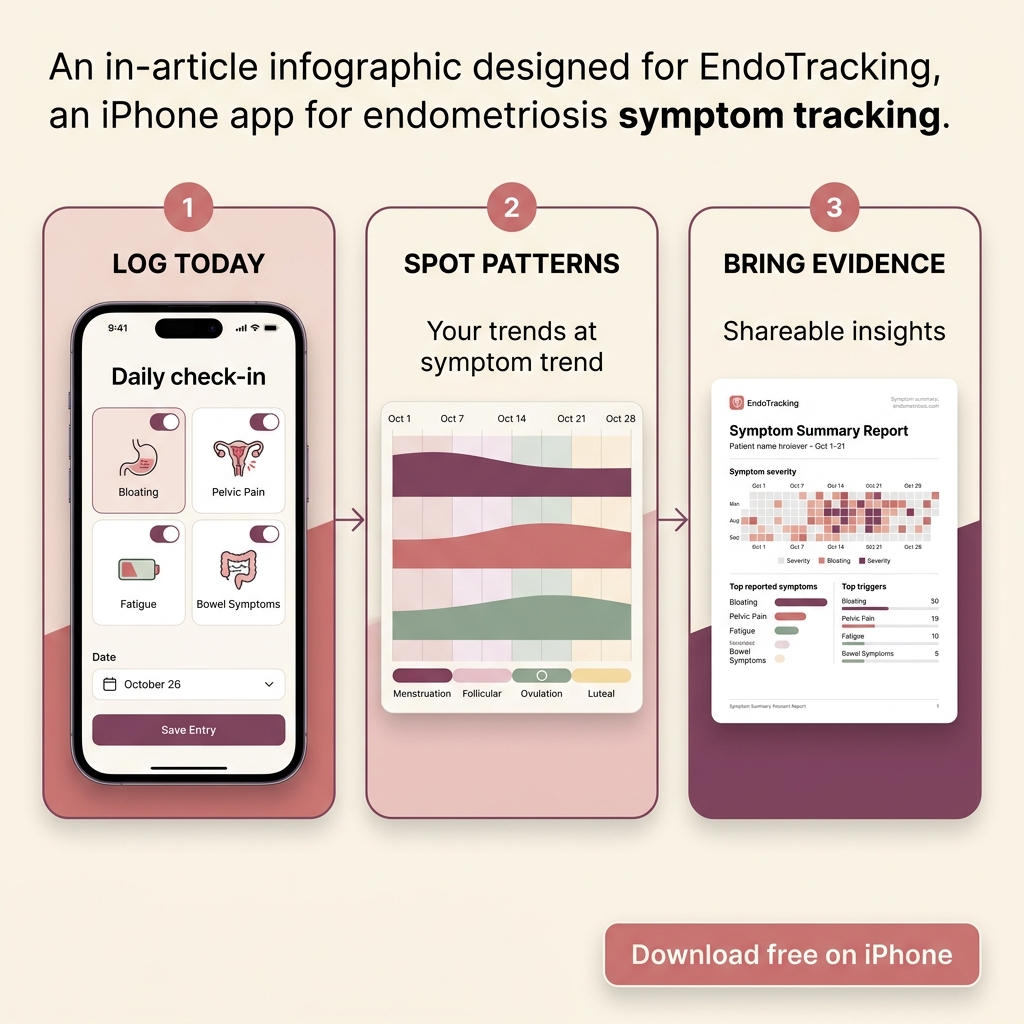
See what happens before an endo belly flare.
Record bloating beside cycle day, food, bowel symptoms, pain, and stress to replace memory with a repeatable timeline.
Start an endo belly logiPhone · iOS 17+ · Core tracking is free; premium insights are optional
See the endometriosis symptom tracker app →What Causes Endo Belly
The short answer is that endo belly has multiple simultaneous causes, which is why it is so hard to treat with a single intervention.
Prostaglandin-Driven Gut Motility Changes
Prostaglandins are lipid compounds that endometriotic lesions produce in excess during the menstrual phase. They are the same compounds that drive uterine contractions during menstruation — but they also act on smooth muscle throughout the body, including in the gastrointestinal tract.
When prostaglandin levels spike around menstruation, the intestines respond with altered motility: sometimes accelerated transit (causing diarrhoea), sometimes spasming that traps gas and slows transit (causing constipation and bloating). For many people with endometriosis, this GI response is severe and rapid — bloating that appears within hours of the menstrual cycle triggering prostaglandin release.
This mechanism is the same one that explains why many people with endo experience diarrhoea at the start of their period: the prostaglandins that drive cramping simultaneously drive intestinal smooth muscle contractions.
Peritoneal Inflammation and Fluid
The peritoneal cavity — the space that contains the abdominal organs — is the primary site of endometriotic lesions. This cavity is normally home to a small amount of fluid, but in active endometriosis, inflammation increases peritoneal fluid volume. Some of this additional fluid contributes to abdominal distension.
More significantly, the inflammatory mediators produced in the peritoneal environment (cytokines, macrophages, reactive oxygen species) affect the gut directly. Intestinal permeability and gut motility are both influenced by peritoneal inflammation — contributing to a permeable gut that allows gas-producing bacteria to produce more gas, and a gut that doesn’t clear that gas efficiently.
Bowel Endometriosis
In people who have bowel endometriosis — endometriotic lesions on the rectosigmoid colon, sigmoid colon, or small bowel — the structural impact on intestinal function can be severe. Lesions that partially obstruct the bowel lumen cause backup of gas and stool above the lesion. Lesions that infiltrate the bowel wall disrupt the peristaltic waves that move contents along.
This is the most serious cause of endo belly and the one most likely to require surgical treatment. Bowel endometriosis is frequently underdiagnosed because standard imaging misses it; transvaginal ultrasound at a specialist centre or pelvic MRI with bowel preparation protocol are required to image it adequately. See our article on endometriosis vs IBS for more on distinguishing bowel endo from IBS.
Hormonal Influences on Gut Function
Estrogen and progesterone directly influence gut motility throughout the menstrual cycle. The drop in progesterone at the start of menstruation typically accelerates gut transit — which is why loose stools at the start of the period are common across the general menstruating population, not just in endometriosis.
In people with endometriosis, the wider fluctuations in hormone levels — and the abnormal estrogen environment that drives endo — amplify these gut effects. The result is a more pronounced gut response to hormonal changes across the entire cycle.
How Endo Belly Differs from IBS Bloating
A common question — and a common source of misdiagnosis — is whether the bloating is IBS rather than endometriosis. The key differences:
Timing: Endo belly is cyclically patterned — reliably worse in the days before and during menstruation. IBS bloating is more randomly distributed across the month and more reliably triggered by specific foods.
Severity: Many endo patients describe bloating severe enough to look visibly pregnant. IBS bloating is typically milder and involves less dramatic visible distension.
Response to diet: IBS bloating responds to low-FODMAP interventions more predictably. Endo belly has a dietary component but is primarily driven by hormonal and inflammatory mechanisms that dietary changes alone cannot resolve.
Associated symptoms: Endo belly often co-occurs with severe pelvic pain, dyspareunia, and dyschezia — symptoms that are not features of IBS. If bloating coincides with these symptoms and tracks the menstrual cycle, endometriosis should be investigated.
That said, endometriosis and IBS can and do coexist — the inflammatory environment of endo may increase true IBS comorbidity. A specialist assessment is the only way to determine what is driving your symptoms.
Managing Endo Belly: What Actually Helps
There is no single solution to endo belly because it has multiple causes. The most effective approaches work on different layers of the problem simultaneously.
Dietary Adjustments
A low-FODMAP diet — which restricts fermentable carbohydrates that feed gas-producing bacteria — can reduce the gas-retention component of endo belly. It doesn’t address the prostaglandin or inflammatory mechanisms, but it removes one significant contributor. The diet works best as a temporary elimination phase (typically 4–6 weeks) followed by systematic reintroduction to identify individual triggers, rather than as a permanent restrictive regime.
Common endo belly triggers to test: cruciferous vegetables (cauliflower, broccoli, cabbage), onions and garlic, legumes, carbonated beverages, and gluten (in people with co-occurring sensitivity).
Smaller, more frequent meals — rather than fewer large ones — reduce the volume of food requiring digestion at any point, which can reduce post-meal bloating severity.
Heat Therapy
A heat pack or heated pad applied to the abdomen helps relax intestinal smooth muscle spasming and can provide significant symptomatic relief during an endo belly flare. This is a supportive measure rather than a cure.
Gentle Movement
Walking for 15–20 minutes after eating supports intestinal motility and helps gas move through the gut rather than accumulating. During a severe flare, this may be the limit of comfortable activity — but even gentle walking reduces gas retention more effectively than lying still.
Hormonal Management
Because endo belly is significantly driven by the prostaglandin surge and hormonal fluctuations of the menstrual cycle, hormonal suppression can substantially reduce its frequency and severity. Continuous hormonal contraception (avoiding the pill-free week), progestogens, or GnRH analogues suppress the cycle-driven trigger. For people whose endo belly is primarily cyclical, this is often the most effective intervention.
Pelvic Floor Physiotherapy
In people with bowel involvement and pelvic floor dysfunction, a pelvic health physiotherapist can address the muscle tension and altered gut-brain patterns that contribute to motility disruption. This is a longer-term intervention rather than an acute remedy.
Surgical Treatment
For people with confirmed bowel endometriosis, excision surgery performed by a specialist can significantly reduce endo belly by removing the lesions affecting bowel function. This is indicated when structural bowel involvement is identified on specialist imaging and when conservative management is insufficient. See our article on endometriosis surgery recovery for what to expect post-operatively.
Tracking Endo Belly
Because endo belly varies so much in timing and severity, systematic tracking is far more useful than trying to recall when it was bad at a clinical appointment. A daily log that records bloating severity alongside cycle phase, food intake, and pain levels over two to three months creates a pattern that is clinically informative.
EndoTracking includes bloating as a dedicated tracked symptom — separate from pain — allowing you to see how your bloating severity maps against your cycle and identify whether it is cyclically driven (suggesting hormonal/prostaglandin mechanisms) or food-triggered (suggesting a dietary component). This distinction guides which interventions are most likely to help.
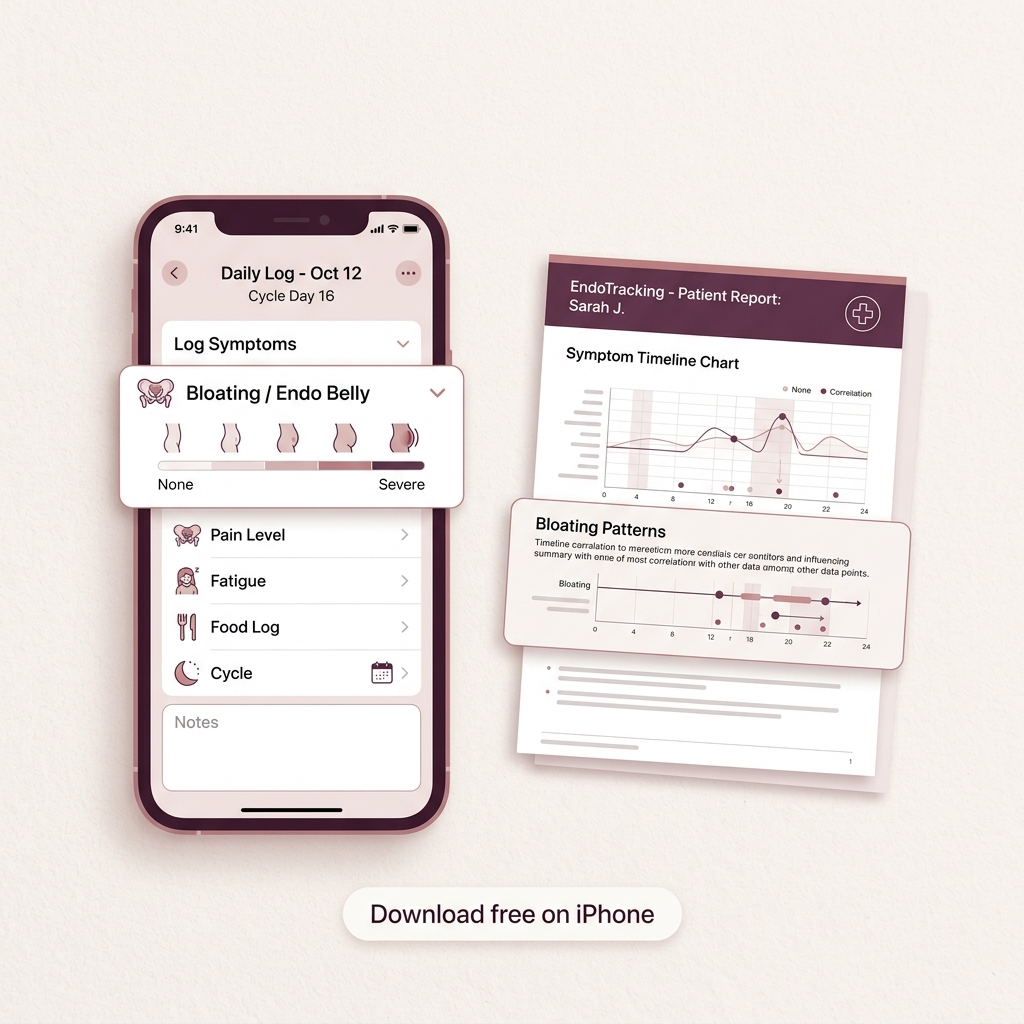
Take a clearer bloating pattern to your clinician.
A daily record can show whether severe bloating is cyclical, meal-linked, or paired with bowel and pelvic pain.
Track the pattern on iPhoneiPhone · iOS 17+ · Core tracking is free; premium insights are optional
See the endometriosis symptom tracker app →Over time, this data builds evidence for specialist referral, particularly if it shows consistent perimenstrual clustering that points to endometriosis rather than IBS as the primary cause.
EndoTracking is a personal health tracking app and does not provide medical or dietary advice. For severe or persistent bloating, consult a gynaecologist or gastroenterologist.